By Talia Soorenko, Board Member and Content Contributor; Editor: Jennifer Fleck, Board Chair
- Have you ever wondered where your tomato was before it ended up on your plate?
- How many people handled your peach before you bought it?
- How far did your lettuce travel?
- What story does the food on your plate tell?
Food fuels us. It gives us the energy to work, learn, play, and connect with others.
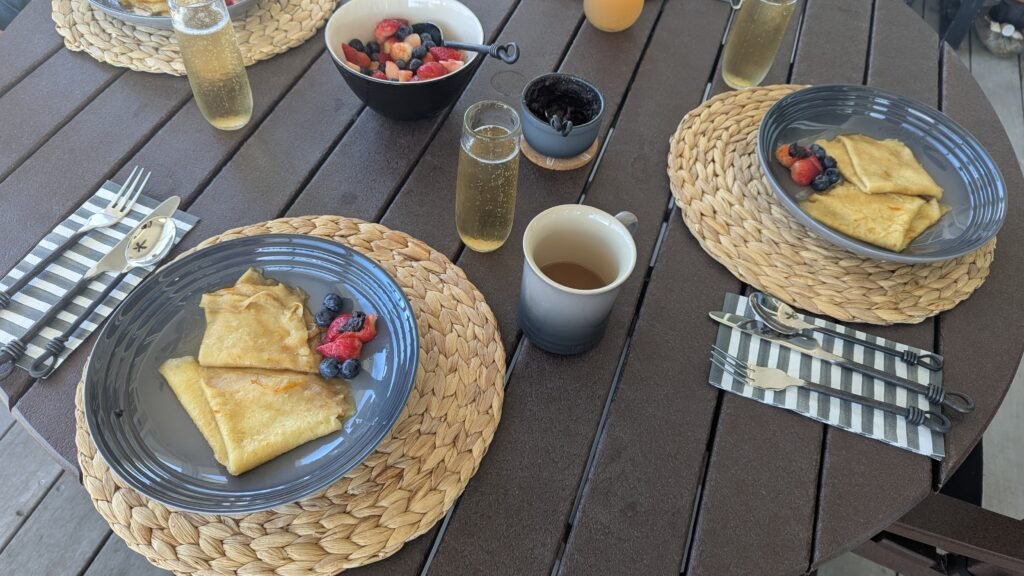
It brings people together around family dinners, weekend barbecues, and picnics in the park. Beyond nourishment, food connects us to culture, the land, the farmers who grow it, our communities, our local economy, and ultimately, our health.
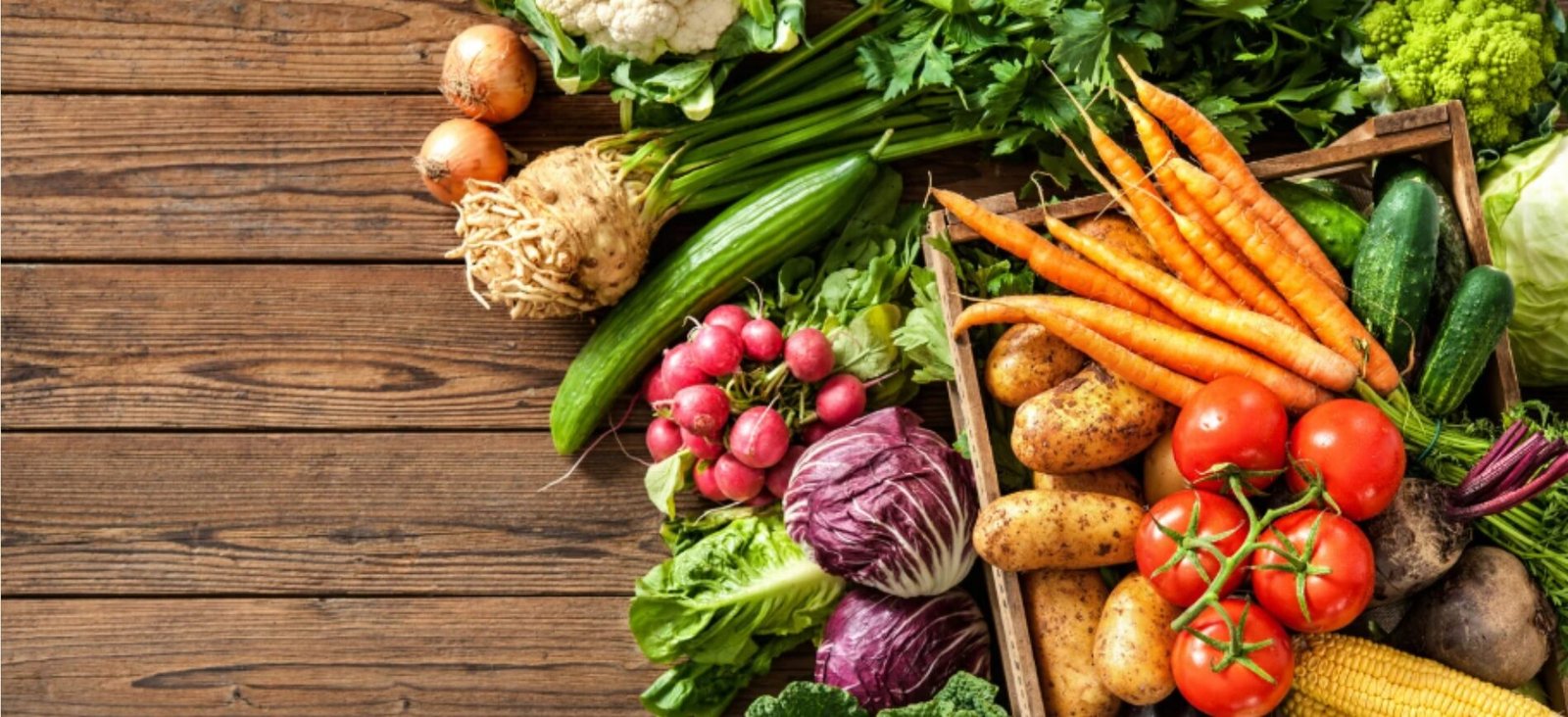
Summer is one of the best times of year to reconnect with that journey. Gardens are overflowing with fresh produce, farmers markets are bustling with activity, peaches and tomatoes are at their peak, and community gardens are producing abundant harvests. What better time to think about where our food comes from?
This summer, while working at a local farmers market, I was reminded that buying local is about much more than produce. I watched neighbors catch up over baskets of tomatoes, children ask farmers how carrots grow, and customers learn what had been harvested just hours earlier. A farmers market isn’t simply a place to shop. It’s a place where communities connect with the people and land that nourish them.
This month, we’ll take a closer look at the journey of food. We will explore why buying local matters. We will also discover how supporting farmers markets, Community Supported Agriculture (CSA) programs, and other local food systems can benefit our health, strengthen our communities, reduce waste, and support a healthier planet.
The Journey of Your Food

Whether we are going out to dinner or preparing a meal at home, every piece of food on our plate has a story.
Before reaching our kitchens, fruits and vegetables often travel hundreds or even thousands of miles through a complex food system involving farmers, transportation, distributors, retailers, and consumers. Understanding that journey can help us make more informed choices about the food we buy, how it was produced, and the impact it has on our communities and the environment.
Follow One Tomato’s Journey
Imagine you’re following one tomato from the moment it’s planted until the end of its life.
It begins as a seed. It needs healthy soil, water, sunlight, and careful tending from a farmer.
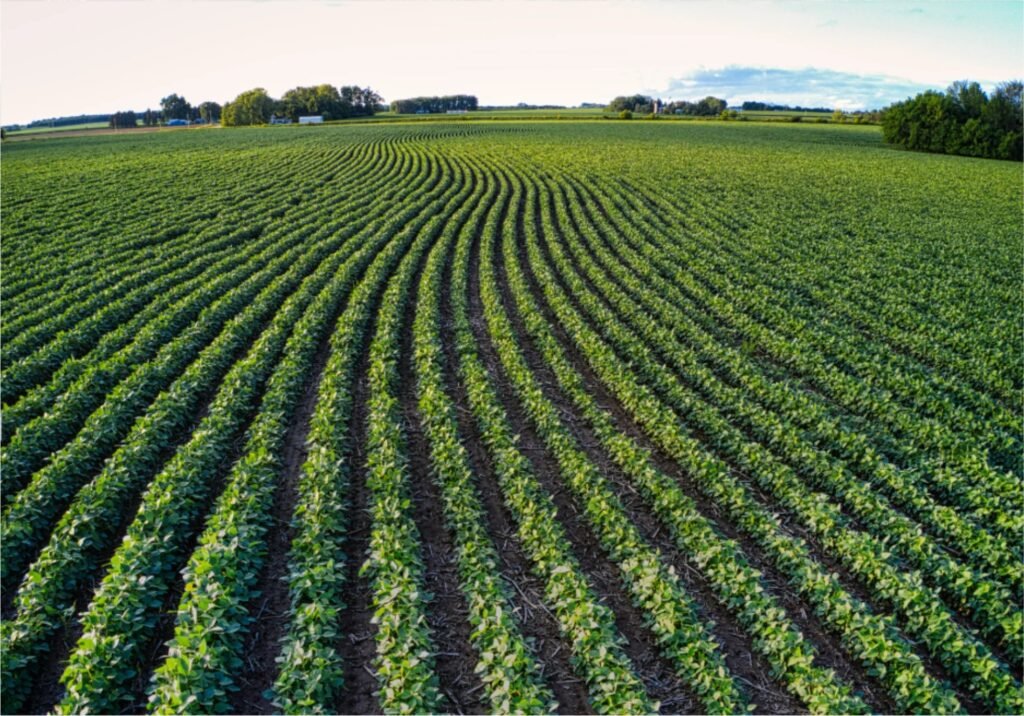
It grows on a farm. Farming practices, from irrigation to pest management, help determine the health of the crop and the surrounding environment.
It is harvested. Once ripe, the tomato is picked and prepared for the next stage of its journey.
It is transported. Depending on where it was grown, it may travel just a few miles to a local farmers market or hundreds, even thousands of miles to a grocery store.
It reaches a market or grocery store. Consumers make decisions based on freshness, price, appearance, and availability.
It arrives on your plate. Whether it is sliced onto a sandwich or tossed into a summer salad, its journey has finally reached your kitchen.
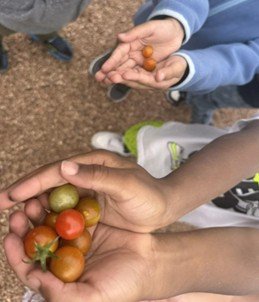
The story doesn’t end there. If it is not eaten, that tomato may become food waste, or it could be composted and returned to the soil, beginning the cycle again.
Long before a tomato reaches your kitchen, its journey begins on a farm. Healthy soil, clean water, quality seeds, and responsible farming practices all influence how our food is grown. Decisions about irrigation, fertilizers, pesticides, and soil management not only affect crop yields but also impact environmental health and, ultimately, the food we eat.
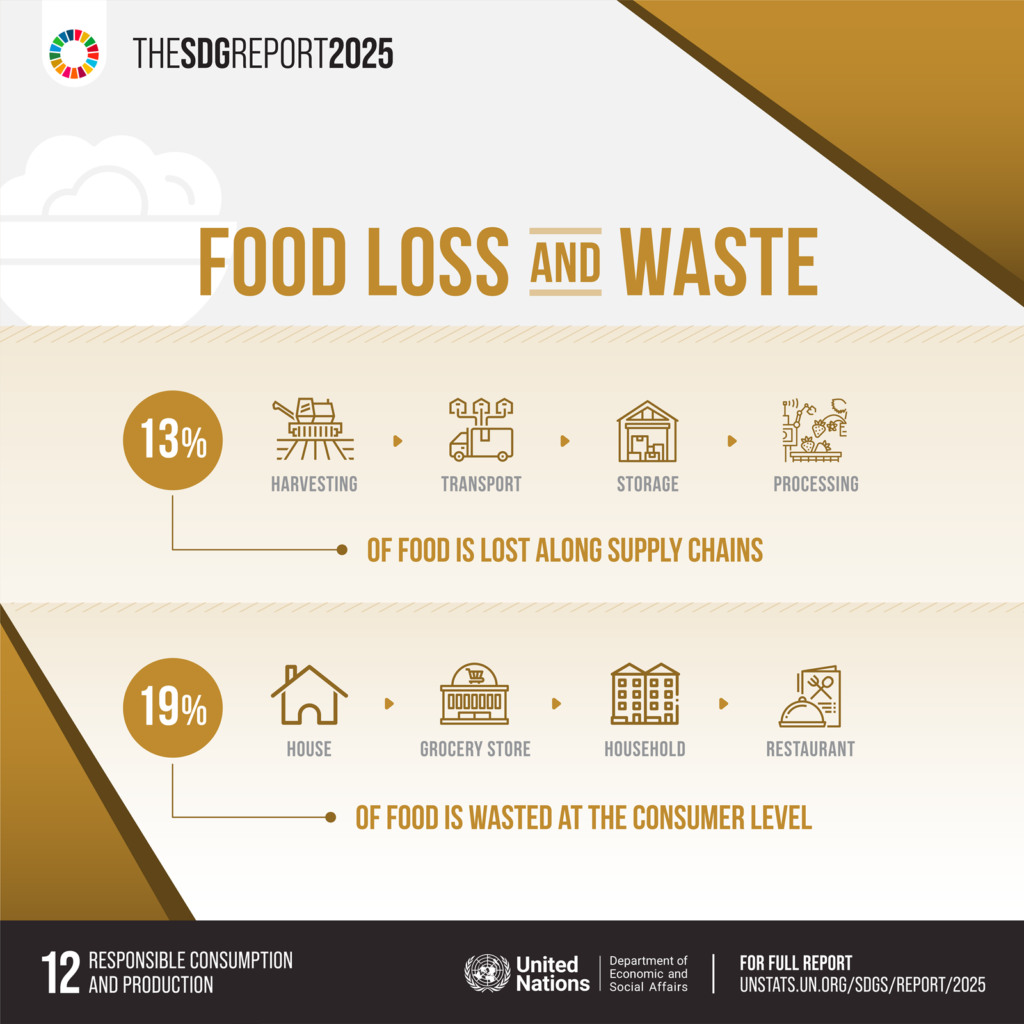
Even after crops are harvested, their journey is far from over. Food must be cleaned, sorted, packaged, transported, stored, and distributed before reaching grocery stores or farmers markets. Along the way, a significant amount is lost. According to the Food and Agriculture Organization (FAO), approximately 14% of the world’s food is lost between harvest and retail. An additional 17% is wasted by retailers and consumers, much of it in our own homes. https://www.fao.org/platform-food-loss-waste/in-action/food-is-never-waste-coalition/en
Reducing food loss and waste is so important that it is included as one of the United Nations Sustainable Development Goals.
Goal 12, Responsible Consumption and Production, calls for cutting global food waste and creating more sustainable food systems.
To explore the process in more detail, the United Nations Environment Programme, created an engaging interactive activity; The Journey of Food that follows the journey of food from farm to table and gives incredible ideas on how to make each step more sustainable. We encourage you to explore it and see how many steps your own meals take before reaching your plate.
Why Buying Local Matters
Buying locally offers benefits that extend far beyond bringing home fresh fruits and vegetables. Every purchase supports a system that benefits people, communities, and the environment.
Supports the local economy. Buying food from local farmers keeps money circulating within the community, supports small businesses, preserves farmland, and helps strengthen local economies.
Benefits the environment. Food that travels shorter distances often requires less transportation, refrigeration, and packaging, helping reduce greenhouse gas emissions and waste. Supporting local agriculture also helps preserve green spaces and farmland within our communities.
Provides fresher, more nutritious food. Locally grown produce is often harvested closer to peak ripeness, meaning it spends less time in storage and transit before reaching your plate. Fresher produce not only tastes better but can also retain more nutrients.
Creates a more transparent food system. Buying directly from local growers gives consumers the opportunity to learn where their food comes from and how it was produced. You can ask questions about growing practices, pesticides, and farming methods, creating a stronger connection between consumers and producers.
Helps reduce food waste. Shorter supply chains mean there are fewer opportunities for food to spoil during transportation, storage, and distribution, helping reduce waste before food even reaches our homes.
Fortunately, supporting local food systems is easier than many people realize. Two of the most common ways are shopping at a local farmers market or joining a Community Supported Agriculture (CSA) program.
Farmers Markets
Farmers markets are more than just places to buy food, they are community gathering spaces. As I experienced this summer while working at a local farmers market, these spaces are about much more than buying produce.
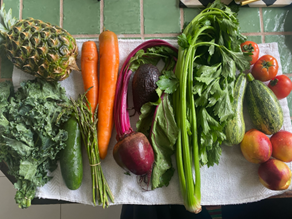
They are places where neighbors connect, children learn where their food comes from, and local farmers share the story behind what they grow.
Visiting a farmers’ market is an opportunity to meet the people who grow your food while supporting local farmers and small businesses. Alongside fresh fruits and vegetables, many markets feature local bakeries, cheese makers, honey producers, flower growers, eggs, jams, pickles, and handcrafted products. Many also include live music, food vendors, and family-friendly activities that bring the community together.
Whether you’re picking up ingredients for dinner or simply enjoying a Saturday morning, farmers markets strengthen local economies while creating meaningful connections between people, food, and the land.
Community Supported Agriculture (CSA)
Another excellent way to support local agriculture is by joining a Community Supported Agriculture (CSA) program.
A CSA allows members to purchase a share of a farm’s harvest at the beginning of the growing season. This early investment helps farmers cover the costs of seeds, equipment, labor, and other expenses when they need financial support the most. In return, members receive regular boxes of fresh, seasonal produce throughout the growing season.
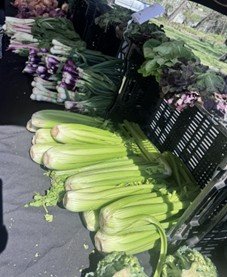
Much like ordering groceries for pickup or delivery, a CSA provides a convenient way to receive fresh food. The difference is that your produce comes directly from a local farm, often just days or even hours after being harvested. Joining a CSA not only provides access to fresh, nutritious, and seasonal foods, but also creates a stronger relationship between consumers and the farmers who grow their food. (https://www.nofavt.org/about/blog/what-csa-and-why-should-you-sign-one)
If you are interested in a CSA, you can check out US Department of Agriculture’s Local Directories: Food Community Supported Agriculture (CSA) Directory.
Conclusion
The next time you slice a tomato, peel a peach, or prepare a fresh salad, take a moment to think about the journey your food has taken. Behind every meal are farmers, natural resources, transportation networks, and communities working together to bring food to our tables.
By supporting local food systems whenever possible, we can strengthen our communities, reduce waste, support local farmers, and help create a healthier and more sustainable future, one meal at a time.
While buying local may not always be possible, and affordability, accessibility, and convenience all play important roles in the choices we make, even small changes can have a meaningful impact. Visiting a farmers market, joining a CSA, or simply choosing one locally grown item during your next grocery trip helps support local farmers, strengthen communities, and create a more sustainable food system. Buying directly from local growers also provides an opportunity to learn more about where our food comes from and how it was produced, creating greater transparency and a stronger connection to the food we eat.
Every meal tells a story. It is a story of the people who planted the seeds, cared for the land, harvested the crops, transported the food, and brought it to our tables. By choosing to support local food systems whenever we can, we become part of that story.
Whether it’s purchasing one locally grown vegetable, visiting a farmers’ market, or simply learning more about where our food comes from, each choice helps cultivate healthier communities, stronger local economies, and a more sustainable future.
Actions to Take
At Wading In, we’re all about meeting you where you are and providing actionable solutions that fit into your life. This newsletter is loaded with ideas for learning and doing small things that will help. Amplifying your individual actions, choose changes that work for you, and start today!
🌱 Earth Friend – Easy adjustments that require minor changes.
- Visit a farmers market this month.
- Buy one locally grown fruit or vegetable.
- Bring reusable produce bags when shopping.
🌿 Green Defender – More intensive swaps and adjustments that require greater effort.
- Join a CSA.
- Learn what is in season where you live.
- Buy fruit or veggies not wrapped in plastic.
🌍 Environmental Warrior – Lifestyle changes which will have a bigger impact.
- Volunteer at a community garden.
- Support policies that improve local food access.
- Grow some of your own food (herbs count!)
Sources:
- https://www.ams.usda.gov/local-food-directories/csas
- https://www.localharvest.org/csa/
- https://www.foodunfolded.com/article/tracing-your-food-understanding-its-journey-from-farm-to-table
- https://www.fao.org/platform-food-loss-waste/in-action/food-is-never-waste-coalition/en
- https://www.unep.org/interactives/journey-of-food
- https://sdgs.un.org/goals/goal12
- https://www.canr.msu.edu/news/7_benefits_of_eating_local_foods
- https://www.nofavt.org/about/blog/what-csa-and-why-should-you-sign-one
- https://www.nal.usda.gov/farms-and-agricultural-production-systems/community-supported-agriculture
Individuals have power and can make a difference to positively change the world. Every day presents new opportunities to learn and grow. Not everything is within our control – but we can control our own actions and can inspire others to make positive change.
Wishing you healthy eating and fun shopping!
Until next time,