
By Talia Soorenko, Board Member and Content Contributor
Editors: Jennifer Fleck, Board Chair and Caitlin Wiley, Board Member
PDF of: February 2026: How to Talk to Friends and Family About Sustainability; WADING IN FOR SUSTAINABILITY Newsletter #5
We all live on the same planet and care about our shared home. However, we are all at different places on our sustainability journeys. At Wading In, we know our readers are passionate about the environment and are highly motivated to make sustainable change, but it’s important to remember that change is hard! Many people are busy, and don’t have the time or motivation to change habits. They might not even be aware of the environmental harms everyday actions generate. As dedicated environmentalists, it’s common to feel a desire to educate and inspire others about how to live more sustainably. But doing so respectfully, in a way that validates another person’s lived experiences, is critical.
In this edition of our newsletter, we’ll dive into how to talk with family and friends about complicated environmental topics. We’ll cover how to broach sustainability topics naturally in different settings, ways to suggest sustainable changes in an approachable manner, and provide examples of what a real conversation might look like. Read on to learn more!
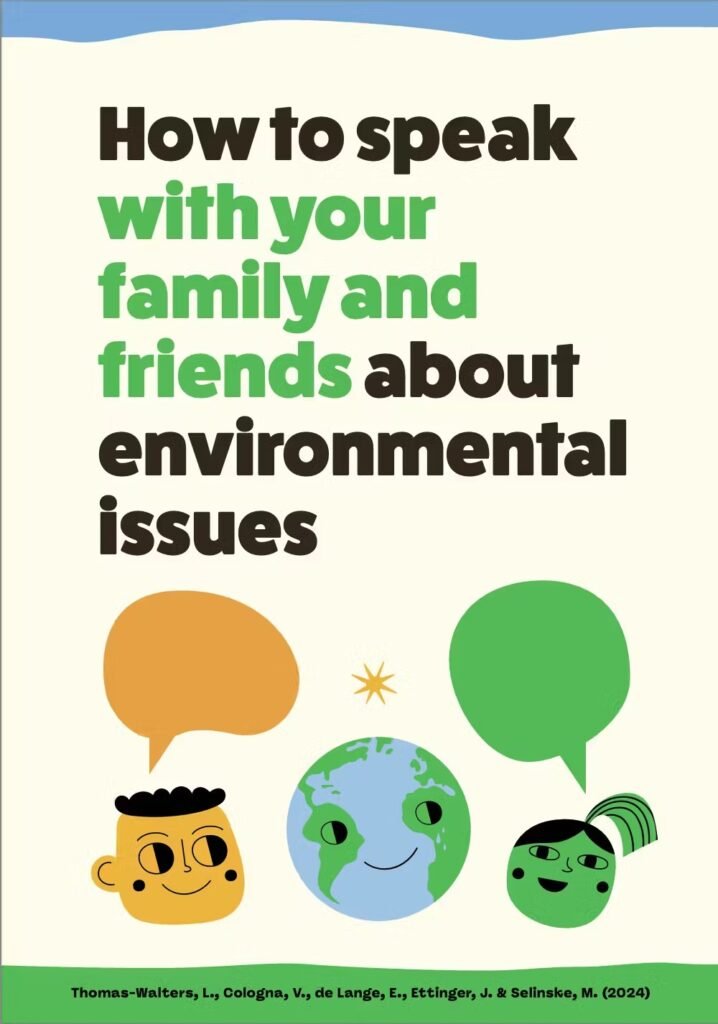
Talking about sustainability with friends and family can be harder than we expect. Many of us begin our environmental journey by becoming more aware of our own habits, the waste we create, the energy we consume, and the convenience we once took for granted. As we make changes in our own lives, it can be …
frustrating to see those around us continuing habits that no longer feel aligned with our values.
While choosing to reduce waste, conserve energy, or eat less meat may feel empowering, those choices are ultimately personal. When conversations about sustainability turn into corrections or critiques, even well-intentioned ones, they can lead to tension and defensiveness instead of understanding. Research shows that when people feel pressured or judged, they are more likely to resist change rather than reflect on it.¹
When I began discussing this newsletter topic with friends and colleagues, many immediately shared how difficult these conversations can be and offered their own stories.
Many of us have lived moments like these:
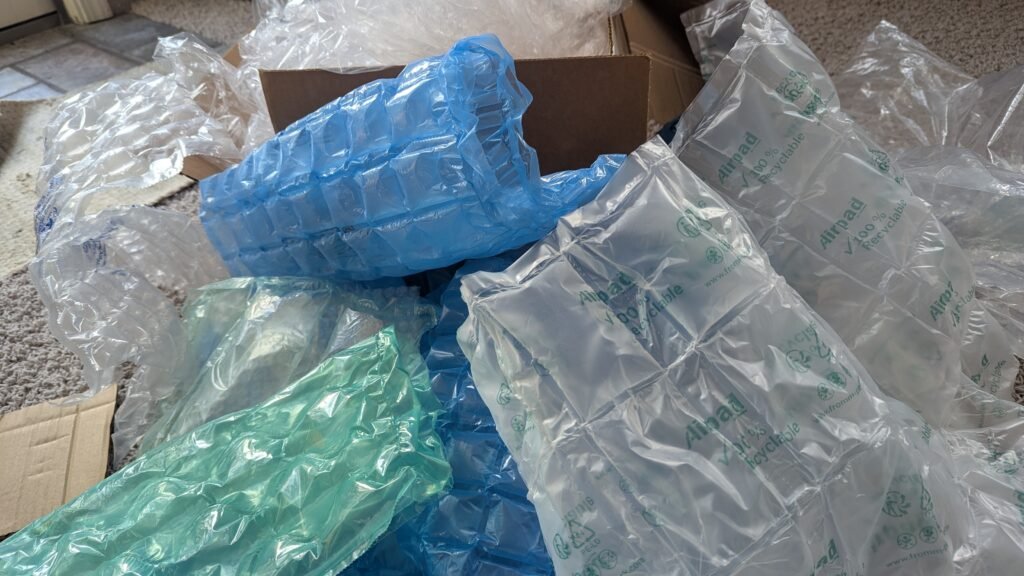
- A package arrives from a friend, parent or relative, stuffed with layers of plastic packaging. You want to express to them that it is unnecessary, but past attempts to say something have led to uncomfortable disagreements; you feel discouraged, so you stay silent.
- At a summer festival, a family member buys a plastic water bottle instead of bringing a reusable one. In the moment, frustration takes over, and what starts as a comment about waste turns into an argument.
- At a barbecue, someone jokes, “don’t tell me you’re one of those people now,” when you skip the burgers. You try to explain your reasons for cutting back on meat and why they could also try, but the conversation quickly shifts to teasing, and you feel put on the spot.
- In an office setting, you notice large amounts of plastic and packaging being thrown away. You suggest reusing boxes or reducing waste, but your supervisor laughs and says, “It’s okay, we have the budget to buy more.” You feel dismissed and unsure how to bring it up again.
Moments like these can feel discouraging. They remind us that sustainability conversations are not just about information. They are about identity, habits, culture, priorities, and sometimes power dynamics. What these stories share is a genuine desire to make a positive impact. But simply telling people what they “should” do, even when backed by facts, often creates resistance. Research suggests that when people feel judged or pressured, they are more likely to shut down than to reflect or reconsider their choices. 2
Dialogues can bridge the gaps between us, or (if done incorrectly) widen the divides. There are some proven ways to connect with people who see things differently, and to convey information in a way people can hear. Read on to learn more.
Reframing from “Do-Less-Bad” to “Do-More-Good”
Instead of focusing on what others are doing wrong, a more effective approach is to reframe the conversation around shared values, curiosity, and connection. Shifting toward curiosity and shared values can open the door to more productive conversations.
Additionally, people are hard-wired to like the idea of “doing-more-good” better than “doing-less-bad”! Researchers at the University of British Columbia administered a survey to 779 participants asking how likely they were to take various environmentally beneficial actions when some were couched in terms of “doing-more-good” (i.e. eating more fruits and vegetables, reusing and recycling more) and others were described as “doing-less-bad” (i.e. driving and flying less meat). Those surveyed said they were more likely to take action and be happier about having done so when the action was framed around positive outcomes and personal values, rather than focusing on guilt or blame.³

From Correction to Connection
When it comes to sustainability conversations, the goal isn’t to convince, it’s to connect. Here are a few approaches that tend to open doors rather than close them:
- Lead with curiosity, not correction. Ask questions and listen before offering advice.
- Share your “why,” not statistics. Personal motivations are more relatable than data.
- Use stories instead of facts. Stories create emotional connection and invite reflection.
- Ask permission before diving in. A simple “Do you want to hear what’s worked for me?” can make a big difference.
- Plant seeds, don’t force change. Small ideas shared gently can take root over time and grow into action.
| Correction | Connection |
| Why are you still using plastic water bottles? | Have you found any reusable water bottles you like? |
| Do you know how many plastic laundry detergent bottles end up in the garbage? | I got tired of always having to recycle my plastic bottles, so I found a better detergent with no plastic packaging! OR Have you ever been to a zero-waste store? I found one that lets me refill containers. I can refill my plastic laundry jug, and they have many options to choose from. |
| Why don’t you just carry reusable grocery bags in your car? | I kept forgetting my reusable bags at home, so I started leaving them in my car and now I always have them. |
| You shouldn’t throw food in the garbage – Food waste in landfills creates methane, which is horrible for the environment. | Have you tried building a compost pile? It’s a great way to get rid of food scraps and get free fertilizer! I’m happy to help you get started! |
| You HAVE to stop using that product. | I found this great sustainable swap I like; I think you might like it too! OR I’m on a quest to find ____. Please let me know if you come across anything that might help. |
These conversations don’t have to be perfect, and they don’t have to happen all at once. By focusing on respect and shared values, we create space for meaningful dialogue for change to happen naturally.
What to Say: Real-Life Conversation Examples
Conversations can feel tricky at the moment. Below are a few gentle, real-world ways to approach sustainability discussions without creating tension.
Example 1: Talking with Family About Waste
Instead of: “Why do you always use so much plastic? This is so wasteful.”
Try: “We fill up our recycle bin too fast, so I’ve been on a quest to see where I can reduce my use of plastic lately. Would you mind if I shared my latest/favorite swap that is really working for me?”
Example 2: Talking About Food Choices
Instead of: “Eating meat is terrible for the environment. You should really cut back.”
Try: “I’m trying to eat less meat and I cooked this delicious meal the other day. All the ingredients were plant-based, I was surprised how easy and delicious it was, next time I’ll make it for you.”
Example 3: Responding to ‘One Person Doesn’t Matter’
Instead of: “Well, that’s not true, here are the facts.”
Try: “I get that, and that thought has overwhelmed me at times. For me, it helps to think about my choices as something I can control and work on. I can’t do everything, but I can do something.
Example 4: Discussing Clothing Choices
Instead of: “Fast fashion is terrible for the environment. You shouldn’t shop there.”
Try: “I’ve been trying to buy fewer, better-quality pieces lately because I realized how quickly some of my clothes wear out. I’ve actually found a few great thrift spots. If you ever want to check one out together, let me know.”
These kinds of responses invite conversation instead of shutting it down, and often leave a stronger impression than facts alone.
Knowing When to Step Back
It’s good to recognize when a conversation isn’t the right moment. Not every setting is a teachable one, and protecting your own energy matters too. Modeling sustainable habits consistently and compassionately can be just as powerful as talking about them. Be open to talk if and when people are ready. Ultimately, if someone isn’t motivated or open to change, pushing them will only make them more resistant.
Why Conversations Matter
Biodiversity loss, melting glaciers, more severe wildfires and storms, worsening air quality; the environmental challenges we face can feel overwhelming. Human activity plays a significant role in accelerating these crises, and it’s easy to slip into feelings of frustration or hopelessness.5
But meaningful change doesn’t only happen through policy shifts or technological breakthroughs. It also happens through culture, through the everyday conversations that shape how we think, what we value, and the choices we make.
In our November 2025 newsletter, Do Individual Actions Make a Difference? 6, we explored how small, personal actions can create ripple effects over time. Conversations work the same way. When we speak openly about sustainability in thoughtful and respectful ways, we normalize it. We make it part of everyday life.
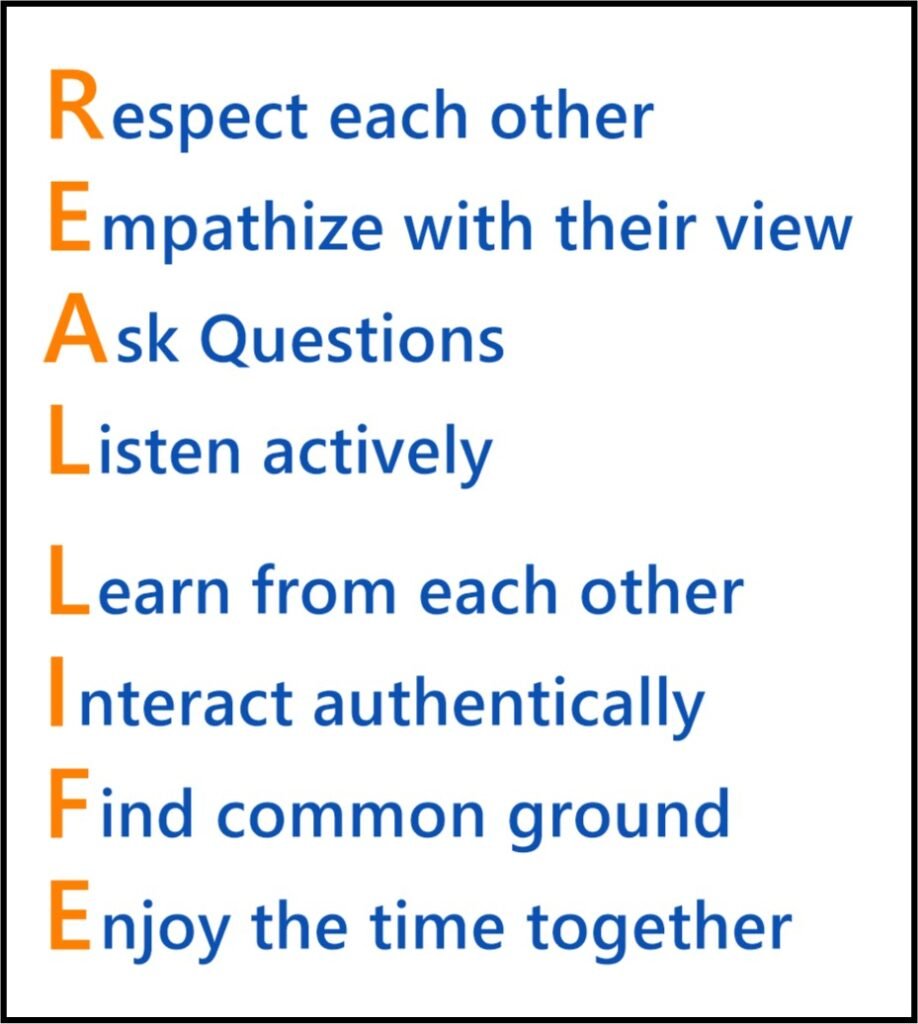
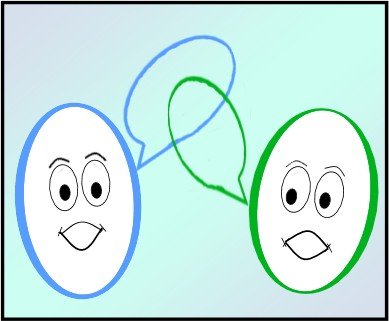
A conversation is not always about persuasion. It is about listening, sharing, and understanding. Instead of trying to win an argument, consider:
- Asking open-ended questions that invite reflection rather than defensiveness.
- Connecting environmental topics to what the other person already cares about, such as health, saving money, community, tradition, or future generations.
- Sharing stories or experiences that shaped your own choices.
- Introducing sustainability naturally into conversation, rather than forcing it.
When we approach conversations with curiosity and care, we help create space for change, not through pressure, but through connection.
Actions to Take in Your Life
Actions to Take in Your Life
At Wading In, we’re all about meeting you where you are and providing actionable solutions that fit into your life. Check out our recommendations below related to amplifying your individual actions, choose the ones that work for you, and start today!
🌱Earth Friend Easy adjustments that require minor changes.
- When talking with others about sustainability, replace “you should” statements with “what’s worked for me” to share your personal experience.
- Share a personal story about why sustainability matters to you, without expecting agreement or change.
- Notice moments when it’s better topause or disengage, protecting both your energy and the relationship.
- Show sustainable habits consistently and visibly, actions often speak louder than conversations.
🌿 Green Defender More intensive swaps and adjustments that require greater effort.
- Ask for permission before sharing sustainability ideas, especially during emotionally charged moments like holidays or family gatherings.
- Offer resources only when invited, such as recipes, local recycling info, or product recommendations.
- Host a gathering (a meal, walk, or activity) that naturally models sustainable choices.
🌍 Environmental Warrior Lifestyle changes with a bigger impact.
- Practice one curiosity-based conversation, such as asking a family member why they prefer a certain habit instead of immediately offering an alternative.
- Facilitate conversations in your community, workplace, or family by creating space for dialogue, not lectures.
- Commit to leading by example long-term, focusing on consistency rather than perfection. Understanding that shifts in mindset often happen slowly and quietly.
Individuals have power and can make a difference to positively change the world. Every day presents new opportunities to learn and grow. Not everything is within our control – but we can control our own actions and can inspire others to make positive change.
Wishing you a wonderful 2026!
Until next time,
Small Steps for Positive Change
References:
1 Giordano, A. (n.d.). Why just telling people to change doesn’t work. Psychology Today.https://www.psychologytoday.com/us/blog/understanding-addiction/202106/why-just-telling-people-to-change-doesnt-work
2 Manning, C. (2009). The psychology of sustainable behavior: Tips for empowering people to take environmentally positive action (Document No. P-EE1-01). Minnesota Pollution Control Agency.https://www.pca.state.mn.us/sites/default/files/p-ee1-01.pdf
3 Radke, J., Guan, S., Dunn, E., & Zhao, J. (2026). How do-more-good frames influence climate action likelihood and anticipated happiness. Frontiers in Communication, 11, Article 1693311.https://doi.org/10.3389/fcomm.2026.1693311
4 Climate Outreach. (2019). Talking climate handbook: How to have a climate change conversation. Climate Outreach.https://climateoutreach.org/reports/how-to-have-a-climate-change-conversation-talking-climate/
5 Yale Climate Connections. (2024, February). How to speak with your family and friends about environmental issues. Yale Climate Connections.https://yaleclimateconnections.org/2024/02/how-to-speak-with-your-family-and-friends-about-environmental-issues/
6 Wading In for Sustainability. (n.d.). Resources.https://wadingin.org/resources
Additional Sources:
Schneider, C. R., Zaval, L., & Markowitz, E. M. (2021). Positive emotions and climate change. Current Opinion in Behavioral Sciences, 42, 114–120.https://doi.org/10.1016/j.cobeha.2021.04.009
Selinske, M. (2024, February 7). How to talk about the environment. MatthewSelinske.com.https://matthewselinske.com/how-to-talk-about-the-environment/
TalkClimateChange.org. (n.d.). Why climate conversations matter.https://talkclimatechange.org/whyConversations
Webster, R., & Marshall, G. (2019). The #TalkingClimate handbook: How to have a climate change conversation. Climate Outreach.https://climateoutreach.org/reports/how-to-have-a-climate-change-conversation-talking-climate/
Recommended Article to help start conversations about climate change: https://apnews.com/article/climate-lifestyle-food-transportation-fashion-energy-4716ef17884b25a108fd3a40497b70ab