
By Caitlin Wiley, Board Member
Editors: Jennifer Fleck, Board Chair and Talia Soorenko, Board Member
PDF of: January 2026: Environmental Impact of Meat & Dairy
WADING IN FOR SUSTAINABILITY Newsletter #4
It’s a new year! Happy 2026 from all of us at Wading In For Sustainability!
The turn of the year is a good time to reflect on the progress from the past
year and set new goals. If one of your goals is to reduce your environmental footprint in 2026, a great place to start is with what you put on your plate three times a day.
We all need to eat, but what we choose to put on our plates has a big impact on the Earth. Agriculture is one of the sectors most responsible for environmental harms such as deforestation and greenhouse gas emissions. However, not all food items have the same footprint – animal products like meat and dairy require far more resources to produce and generate more greenhouse gas emissions than crops like soybeans and rice. Reducing your
consumption of meat and dairy by choosing plant-based alternatives is a delicious action you can take as an individual to help protect the health of our planet.
This edition of our monthly newsletter will break down the science behind the environmental footprint of food, present some healthy and environmentally-friendly alternatives, and provide a few plant-based recipes to get you started!
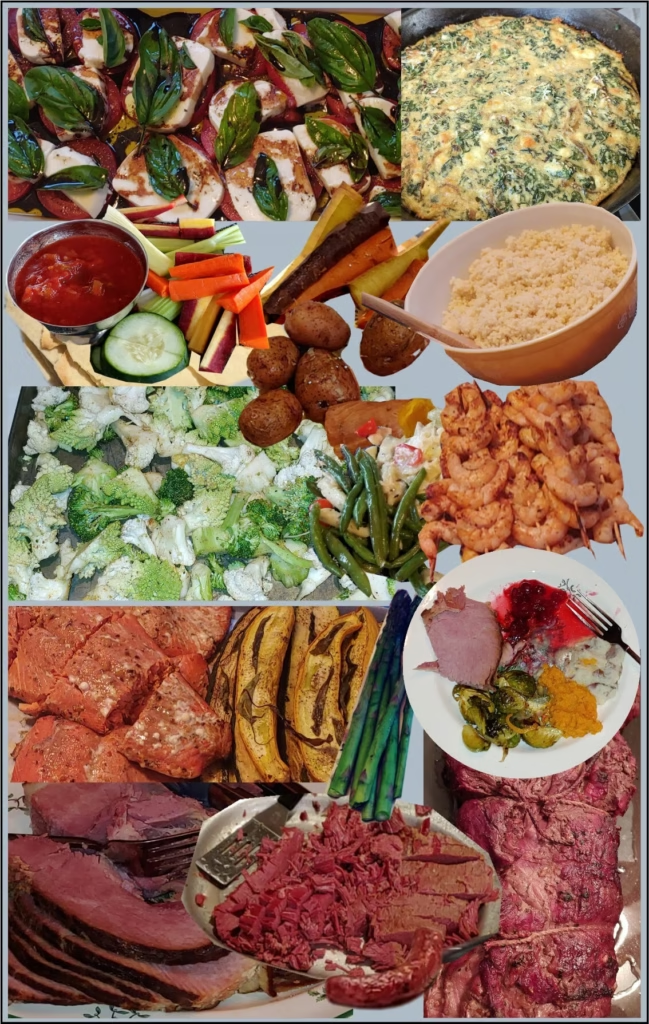
Eating the Planet: The Environmental Impact of Meat and Dairy What is the environmental impact of food? Modern agriculture is incredibly resource-intensive. Globally, about two-thirds of all global freshwater withdrawals go to irrigate crops and water livestock,¹ and agricultural activities occupy a total area roughly the size of Asia and Europe combined.² It is also …
one of the sectors most responsible for greenhouse gas (GHG) emissions, annually generating one-quarter¹ of all human-caused GHGs. GHG emissions cause global climate change by trapping heat in our atmosphere through the greenhouse effect, so reducing these emissions is critically important.
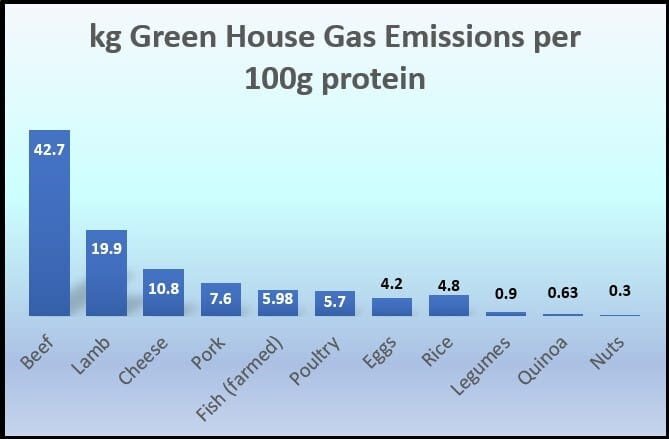
What foods have the most and least environmental impacts?
Although the agricultural sector as a whole has a large environmental footprint, different types of food
products have vastly different impacts. In general, plant products (such as beans, nuts, and soy) require less water and land and emit less GHGs than animal products (such as beef, mutton, and cheese).¹ In fact, the majority of GHG emissions from agriculture (56% – 58%) come from livestock production.³ This is due to the large amount of food that livestock animals eat, along with emissions from those animals.³
Wait, you’re telling me ANIMALS produce greenhouse gases?!?
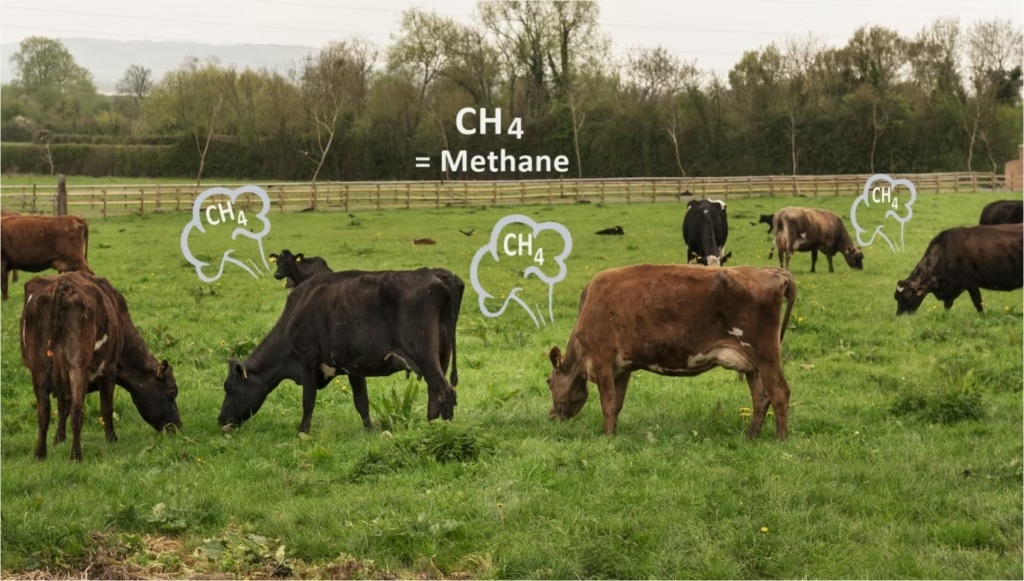
Yes! Several common types of livestock, including cows, sheep, and goats, are what’s called “ruminants.” A ruminant is an animal with multiple stomach compartments that digests food by fermenting it, allowing them to eat fiber-rich foods such as grasses. A byproduct of their fermentation process is methane, a potent greenhouse gas that traps heat in our atmosphere more effectively than carbon dioxide. These animals release this methane by burping! So, as cows, sheep, and goats digest, they burp methane into the atmosphere. Several technologies are currently being developed to reduce the methane produced by popular livestock species, but none can reduce their emissions to zero. For more details on current research and a breakdown of how ruminants digest their food, check out this resource written by Conor McCabe, a cattle sustainability researcher at the University of California, Davis.⁴
Is there variability in the environmental impact of certain foods? Could there be sustainable beef, for example?
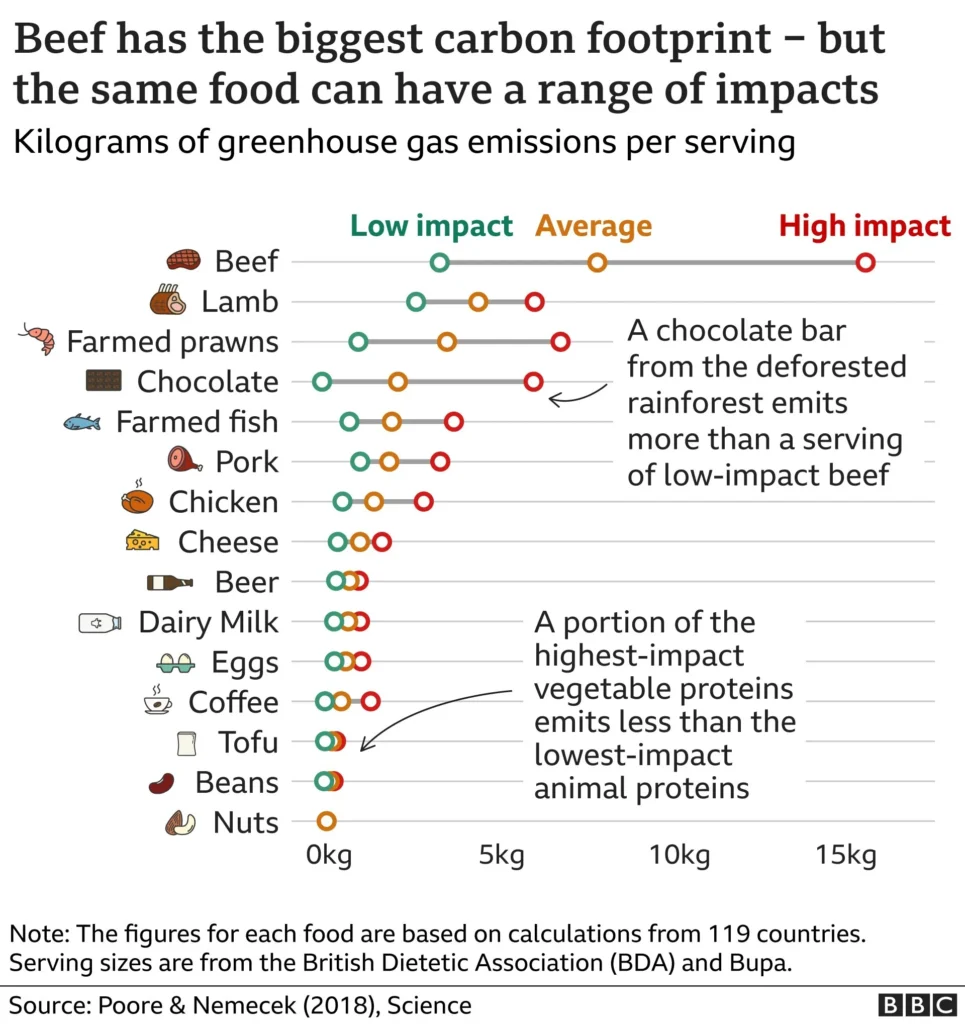
Where and how a product is grown make a big difference. For example, if a rainforest is cut down to make way for a soybean plantation, that’s a major environmental harm. Even if that soy is used to make tofu, which consumers then choose over beef, the deforestation to grow the soy negates any potential environmental benefits. Likewise, some ranchers raise livestock in very sustainable ways, using available technology to reduce methane burps and restore pastureland.
The following chart from the BBC,⁵ based on data from an article published in the academic journal Science, illustrates how the same product can have a variable footprint. In general, however, most academics agree that beef is the most GHG-intensive food product available. Other animal products are less harmful, but still have a greater environmental impact than items like beans, nuts, and tofu.
More Sustainable Dietary Alternatives
Okay, so meat and dairy have major environmental impacts. So what’s a better dietary alternative for the planet? Simple – a plant-based diet! A plant-based diet consists of non-animal products and typically includes grains and cereals, fruits, vegetables, nuts, legumes, and some processed foods, such as soy-based meat alternatives.
Plant-based foods generate on average 10 to 50 times less GHGs than animal products.⁶ According to Poore and Nemecek (2018),¹ if everyone in the world switched to a fully plant-based diet, we could halve GHG emissions from food. Reducing meat consumption in wealthier countries like the United States, where per capita meat consumption is above the global average, would have an even greater positive effect.
Plant-based diets aren’t just good for the planet – they’re better for people too! There is substantial academic evidence suggesting that a plant-based diet is better for human health in the long run. Several studies⁷ have shown that people following plant-based diets are at much lower risk for obesity, Type 2 diabetes, heart attacks, and high blood pressure.
We at Wading In know that switching to a fully plant-based diet overnight is unlikely to be a realistic goal for many people, and we aren’t suggesting you need to! We know it’s hard to change habits, especially when it comes to something as important as food. Additionally, we also recognize that many plates with meat and dairy hold significant cultural importance. Many Americans have a hard time imagining the holidays without turkey or ham; weekend barbecues are an important gathering time for many cultures; and deviating from a family recipe that calls for lamb might not be possible.
Nutrition Values approximate – from labels or www.fdc.nal.usda.gov/food-details
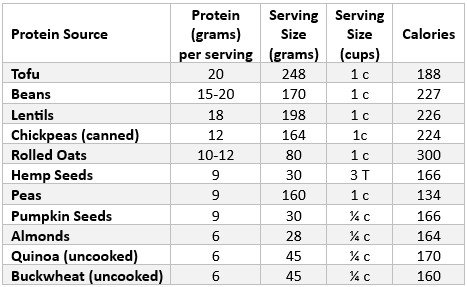
However, it’s important to be aware of the environmental impacts of the food we consume, and to consider ways you could start taking small, achievable steps to make a difference. Replacing a few meat and dairy meals every week with plant-based swaps is a delicious way to be sustainable, and doesn’t require you to completely cut out animal products. Challenge yourself to reduce your meat and dairy consumption even a little bit, and you’ll already be making a big difference.
Veggie-Based Recipes to Kick Off 2026
Not sure where to start with cooking plant-based meals? Give these hearty winter recipes a try!
Vegetarian Chili
Servings: Approximately 8 bowls
Prep time: 15 min
Cooking time: 45 min
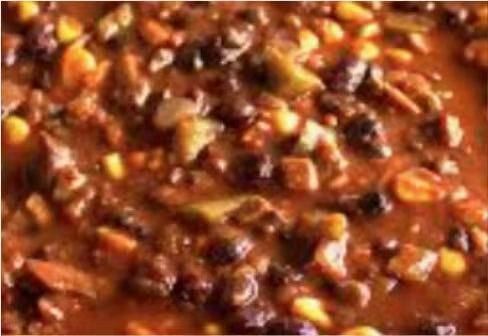
A substitute for traditional meat-based chili recipes, this hearty stew is packed with nutritious veggies and extra legumes. The spice level in this recipe can be adjusted to taste, and the salt can be reduced or omitted for those on a low-sodium diet.
Tip: The key to cooking a good chili is to ensure it’s not so thick that the mixture can’t cook properly, but not so thin that it becomes too much like soup. One of the key ingredients in this recipe, which adds flavor and helps thin the mixture, is a can of beer! This could be any light beer – a lager, wheat beer, IPA, or even a non-alcoholic beer. The alcohol will be cooked off as the chili combines, but it will leave a subtle flavor that brings the rest of the stew together.
Ingredients:
- Drizzle of olive oil
- One tbsp minced garlic
- One large onion, diced
- Two bell peppers, diced
- Three large carrots, chopped into thin slices
- One 28 oz can of crushed tomatoes
- Two 15 oz cans of chili beans (mild or spicy, as desired)
- One 15 oz can of sweet corn, drained
- One 15 oz can of chickpeas, drained
- One can of light beer (suggest a lager or wheat beer)
- One tbsp cumin
- One tbsp chili powder
- ½ tsp garlic powder
- ½ tsp onion powder
- 1 tsp salt (or to taste)
- Dash of black pepper (or to taste)
- Shredded cheese for serving (optional)
- Oyster crackers for serving (optional)
- Green onions, chopped for serving (optional)
Directions:
- In a deep pot, heat a drizzle of olive oil over medium-high heat. Add minced garlic, onion, bell peppers, and carrots. Stir frequently until vegetables are tender, approximately 8-10 minutes.
- Add crushed tomatoes, chili beans, corn, chickpeas, beer, and seasonings. Stir to combine. If the mixture looks too thick once combined (little to no liquid visible on the top, chili sticking thickly to the spoon), add 1 cup of water and stir again.
- Increase heat to high and briefly bring the chili to a roiling simmer for 3 minutes, stirring frequently.
- Reduce heat to medium-low and stir occasionally for at least 30 minutes, allowing the flavors to fully combine.
- Serve with shredded cheese, oyster crackers, and green onions as desired.
Lemon Orzo Soup
Servings: Approximately 8 bowls
Prep time: 15 min
Cooking time: 25 min
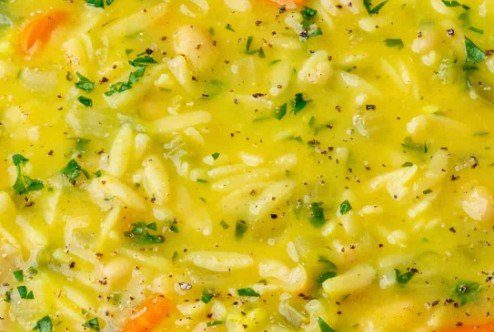
A warm and soothing soup with a bright lemon flavor, perfect for colder weather. The orzo pasta gives this recipe a fun variation – the small, oval-shaped pieces of pasta absorb flavors well and offer a different look from traditional noodles in soup. For those who cannot eat gluten, try replacing the orzo with a grain like quinoa or rice for a wheat-free soup!
Ingredients:
- Drizzle of olive oil
- One tbsp of garlic, minced
- One large onion, diced
- Four carrots, sliced thinly
- One bunch of celery, sliced into small pieces
- One tbsp dried thyme
- One 32 oz carton of vegetable stock
- One cup orzo pasta*
- One tbsp dried rosemary
- One large lemon, juiced
- One tsp salt, or to taste
- One tsp black pepper, or to taste
*Gluten-free option: Replace orzo with quinoa or rice
Directions:
- Heat a drizzle of olive oil in a large stock pot. Add garlic, onion, carrots, and celery. Cook until the vegetables are tender, approximately 8-10 minutes.
- Add thyme, and cook for one minute until fragrant.
- Add vegetable stock plus one cup of water. Bring to a boil for one minute.
- Add orzo pasta and reduce heat. Simmer for 8-10 minutes, until orzo pasta is cooked through.
- Remove pot from heat and add rosemary, lemon juice, salt, and black pepper.
Sweet Potato and Black Bean Tacos
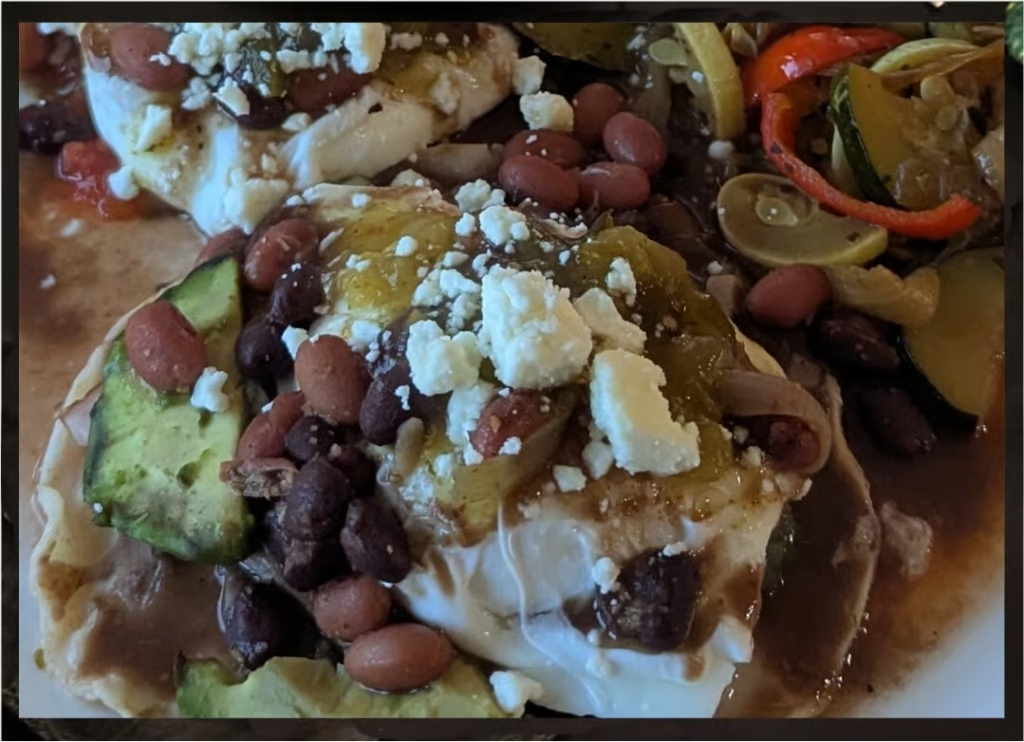
When you think of tacos, you probably picture the classic tacos al pastor, beef with birria, or even chicken tinga, but there’s a 100% veggie-based option you’ve probably never tried!
Roasted sweet potatoes and black beans combine to make an amazing and super filling meat-free taco option in this recipe you need to try. We love this version from Grandma Recipes – check it out and give it a try!
Want more veggie-based recipes? Here are some more great resources to help you shop, cook, and eat more sustainably:
- Fork Ranger – If you’re interested in learning more about the impacts of food, as well as how you can put sustainable theory into practice, the folks at Fork Ranger have exactly what you need. Their free app provides bite-sized learning along with tons of great recipe suggestions to eat better for you and the planet!
- PlantYou Cookbooks – Food blogger and author Carleigh Bodrug has written several plant-based cookbooks (including a #1 New York Times bestseller!) that focus on zero-waste cooking and using kitchen scraps to make creative recipes. Plus, Carleigh shares many of her awesome recipes on social media! Check out her Instagram for a virtual smorgasbord of great videos for inspiration!
Actions to Take in Your Life
At Wading In, we’re all about meeting you where you are and providing actionable solutions that fit into your life. Check out our recommendations below related to amplifying your individual actions, choose the ones that work for you, and start today!
🌱Earth Friend Easy adjustments that require minor changes.
- Commit to Meatless Mondays. Don’t feel comfortable cutting out meat or dairy entirely? Then don’t! Any reduction in meat and dairy consumption, even just skipping them one day a week, is still a win for the planet. Join Meatless Mondays and start skipping meat one day a week, eating meat only on weekends, or eating meat only once a day.
- Find an alternative milk or cheese option. Next time you order a cappuccino at your local cafe, ask for almond, oat, coconut, or soy milk. (It might help your digestion too.) Skip the real cheese at the grocery store and go for a plant-based alternative – Rebel Cheese offers plant-based cheese made with nuts, or for those with nut allergies, VioLife has nut-free options!
🌿 Green Defender More intensive swaps and adjustments that require greater effort.
- Become a flexitarian. Make the majority of your meals fully plant-based. While you might still eat meat or dairy occasionally, see if you can find plant-based substitutes for the meat and dairy components of your favorite recipes. The animal protection organization People for the Ethical Treatment of Animals has a list of recommended swaps for virtually every meat and dairy option – check it out and adjust your grocery list!.
- Buy from local farms and farmers’ markets. Although agricultural products account for a smaller share of greenhouse gas emissions, the emissions associated with transporting them to markets (shipping them from the farm to processing facilities and then to grocery stores) can be reduced by shopping local. Seek out farmers’ markets and visit local farms to support small businesses near you whenever possible.
🌍 Environmental Warrior Lifestyle changes with a bigger impact.
- Go vegetarian or vegan! Challenge yourself to cut out all meat or all animal products and eat a fully plant-based diet. To ensure you still get the appropriate quantities of macronutrients and can supplement your diet with any additional nutrients as needed, we’d recommend tracking your macronutrients and consulting with a professional registered dietitian. There are many plant-based, vegetarian, and vegan dietary experts who can provide guidance throughout the process. Try using a site like Plant-Based Dieticians to find the right fit for your needs!
Individuals have power and can make a difference to positively change the world. Every day presents new opportunities to learn and grow. Not everything is within our control – but we can control our own actions and can inspire others to make positive change.
Wishing you a wonderful 2026!
Until next time,
Small Steps for Positive Change
References:
¹ Poore, J., & Nemecek, T. (2018). Reducing food’s environmental impacts through producers and consumers. Science 360, 987-992. DOI:10.1126/science.aaq0216.
² Grunwald, M. (2025). We are eating the Earth: The race to fix our food system and save our climate. Simon & Schuster. https://www.simonandschuster.com/books/We-Are-Eating-the-Earth/Michael-Grunwald/9781982160074.
³ Gerber, P.J., Steinfeld, H., Henderson, B., Mottet, A., Opio, C., Dijkman, J., Falcucci, A. & Tempio, G. (2013). Tackling climate change through livestock – A global assessment of emissions and mitigation opportunities. Food and Agriculture Organization of the United Nations (FAO), Rome. https://openknowledge.fao.org/server/api/core/bitstreams/492bb0b2-8b73-4e49-b188-8176b1d8c711/content.
⁴ McCabe, C. (2024, April 22). Why do cattle produce methane, and what can we do about it? Clarity and Leadership for Environmental Awareness and Research, University of California Davis. https://clear.ucdavis.edu/explainers/why-do-cattle-produce-methane-and-what-can-we-do-about-it.
⁵ Stylianou, N., Guibourg, C., & Briggs, H. (2023, November 27). Climate change food calculator: What’s your diet’s carbon footprint? BBC News. https://www.bbc.com/news/science-environment-46459714.
⁶ Dunne, D. (2020, September 9). Interactive: What is the climate impact of eating meat and dairy? The Carbon Brief. https://interactive.carbonbrief.org/what-is-the-climate-impact-of-eating-meat-and-dairy/index.html.
⁷ Gibbs, J., & Cappuccio, F. P. (2022). Plant-Based Dietary Patterns for Human and Planetary Health. Nutrients, 14(8), 1614. https://doi.org/10.3390/nu14081614.