
By Caitlin Wiley, Board Member
Editors: Jennifer Fleck, Board Chair and Talia Soorenko, Content Contributor
PDF of: November 2025: Do Individual Actions Make a Difference? WADING IN FOR SUSTAINABILITY Newsletter #2
As professionals focused on sustainability, one of the most common questions we get is, “Do my individual actions make a difference when the problems are so massive?”
Spoiler alert: they will! This month’s newsletter dives into the importance of individual action and the ways in which individuals can impact the world around them.
Many of the people who ask this question want to help solve big problems like climate change, but want to do so in the most impactful way, or worry that minor changes won’t make a difference. The answer we always give is that everyone has the power to affect positive change, both in their own life, and in the lives of others! Every individual person who decides to change their habits, buy more sustainably, educate themselves, and advocate for broader change makes a critical difference, even when the scale of the problem is big.
Individual changes do matter and directly contribute to solving complicated environmental problems for four key reasons:
- Seemingly small individual choices quickly add up to big change;
- Individuals making sustainable changes have the power to inspire others to do the same;
- Consumers have the power to “vote with their dollars,” sending a message about the kind of world they want to live in;
- Individual people working to lead more sustainable lives need to rely on their community connections to do so, which leads to stronger networks and greater collective power to advocate for change.
Individual Changes Add Up
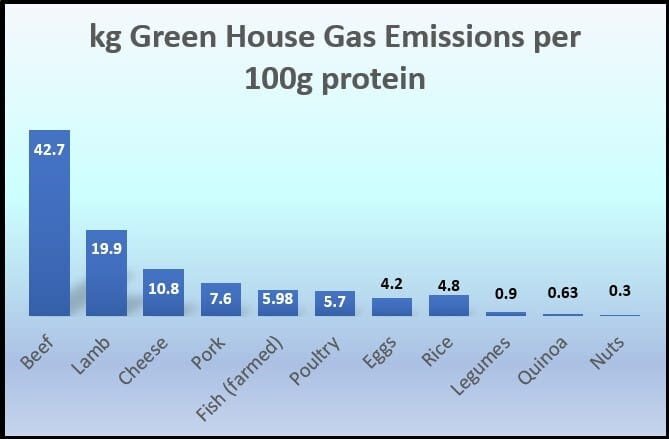
The first point here is that individual actions have momentum to make a significant difference. To illustrate this point, let’s consider the carbon footprint of the beef Americans eat daily, and how much greenhouse gas emissions could be avoided with some minor changes.
Beef is one of the most resource-intensive products due to the water and land required to raise cows. It is also the most greenhouse gas-intensive source of protein, as cows naturally expel methane, a much more potent greenhouse gas than carbon dioxide.¹ The environmental impact of food is not the focus of this newsletter, but if you would like to learn more, see ForkRanger.com.²
A team of researchers estimated that the total greenhouse gas emissions from raising a cow for meat is about 42.7 kilograms of carbon dioxide-equivalent emissions per kilogram of beef.³ ⁴ The researchers also put annual total beef consumption in the U.S. at 5.85 trillion grams, meaning that, in total, beef is responsible for approximately 249.8 million metric tons of carbon dioxide equivalent gases, or about 4% of total US greenhouse gas emissions.⁵
Now, let’s suppose that all residents of the U.S. decided to stop eating beef on one day of the week. If we assume that they were previously eating beef every day, then this would reduce each person’s greenhouse gas emissions from eating beef by about 14%. Collectively, if all these individuals ate a little bit less beef, it would add up to a greenhouse gas emissions reduction of 35 million metric tons of carbon dioxide equivalent. To put this number into perspective, this would be like taking 8 million gasoline-powered cars off the roads for a whole year – all just from everyone slightly reducing their beef consumption.⁶ Small actions do matter, and add up to big change.
Individuals Taking Action Inspires Others
Secondly, individuals making positive changes can inspire others to take action as well. When people see a positive action, it makes similar actions seem more accessible, creating a ripple effect. For example, Wading In content contributor Talia Soorenko recalls a time while she was living in China when she took an environmentally-conscious action, inspiring others to do the same:
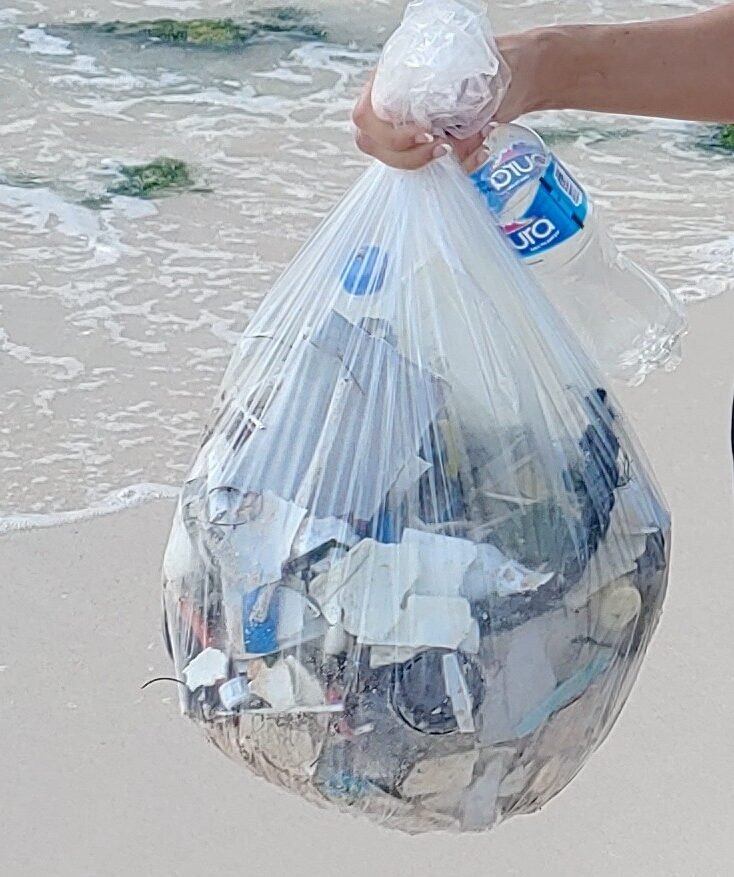
“When I first moved to China, I went to a nearby beach where plastic waste was floating in the water. I put on my goggles, swam around, and began picking up the trash. Within minutes, other beachgoers saw me, walked over and started to help carry the trash to the bins, some even joined me in the water collecting debris. One small action turned into a group effort simply because someone took the first step.”
This isn’t just true of environmentally beneficial actions; there is research to suggest that kindness can also be contagious.⁷ Some researchers have found that acts of altruism,
caring for others without any personal gain or reason to do so, can influence others to do the same. We all have the power to make a difference, and we can choose what that difference is.
Sending Demand Signals to Businesses – $$$$
Thirdly, individual consumers changing their buying habits sends a strong message to companies and governments. Consumers have the power to “vote with their dollars,” telling the world with each purchase (or by choosing not to buy something) what they value. Shopping at small businesses, sustainable businesses, and women- and minority-owned businesses instead of large corporations sends a message that you value a greener, more sustainable economy. For more about sustainable buying habits, keep an eye out for future resources on Wading In’s website.
While individual consumers have power, that power is even greater when people join together. There are dozens of historical examples of successful boycotts where consumers banded together to send a strong message to a company that they wanted to see changes.⁸ Boycotts work, and businesses pay attention when they see a dip in sales as a result. They don’t need to be nationwide to be effective; convincing your friends and family to refrain from shopping at an unsustainable corporation is a positive change. Most movements start small and grow into something meaningful.
Building Stronger Networks and Collective Action Power
The fourth and final point is that when individuals start making more sustainable choices for themselves, this often leads to them creating greater connections with their community.
In her recently published book The Serviceberry: Abundance and reciprocity in the natural world, Indigenous botanist Robin Wall Kimmerer discusses how a “gift economy” based on mutual assistance and sharing would operate as an alternative to the current system.⁹ Her key message is that the existing transactional system divides people, keeping many from forming meaningful connections. A gift economy, on the other hand, would require people to become more connected with their community, engaging at a deeper level with their neighbors and trading what they have to spare.
While we don’t yet know whether a true “Serviceberry economy” would work in practice, leading a more sustainable life often entails becoming more deeply rooted in your community. Purchasing produce from local farmers, buying slow fashion from artisans who make clothes, and getting to know your neighbors through Buy Nothing Project groups are examples of ways to consume more sustainably. A happy side effect of many of these actions is that you will likely form stronger networks with people who are also trying to make more sustainable choices. Stronger networks mean greater collective action power – once the networks are established, it’s easier to take actions like collectively lobby elected officials, organize boycotts of unsustainable businesses, and positively inspire others to make sustainable change.
Individuals have power and can make a difference to positively change the world. Every day presents new opportunities to make better choices. However, it’s always important to remember that we all live within political, economic, and social systems that are not totally within our control – while we can control our own actions and can inspire others to make positive change, altering our systems is a much tougher, long-term task. Reducing your environmental impact in your life and joining with others working to do the same are the first steps on the path to changing the broader systems in which we live.
Actions to Take in Your Life
At Wading In, we’re all about meeting you where you are and providing actionable solutions that fit into your life. Check out our recommendations below related to amplifying your individual actions, choose the ones that work for you, and start today!
🌱Earth Friend – Easy adjustments that require minor changes.
- Better understand your own individual carbon footprint. To start reducing your individual impact and take action that inspires others, you first need to understand your impact. Try CoolClimate’s carbon footprint calculator to assess how your actions compare with the average person and decide where you can make changes.
- Encourage friends and family to carry reusable items. Talk to the people in your life about getting a reusable water bottle or reusable grocery bags – every bit of trash avoided helps!
- Share what you have with your neighbors. Start getting to know more people in your community by posting about what you have to give on a Buy Nothing Group page or in a neighborhood group chat. This could be anything – extra cookies, baby clothes you no longer need, extra produce from your garden, seasonal sporting gear, etc. Build community and help those around you.
🌿 Green Defender – More intensive swaps and adjustments that require greater effort.
- Join a sustainability or climate group. Check out national organizations like 350, the Climate Reality Project, and the Sierra Club to see if there’s a local chapter near you, or join online. These groups always need more diverse perspectives and members who can contribute their time and talent.
- Commit to eating less meat and dairy. At family gatherings or when out with friends, try to order the vegetarian or vegan option, and encourage others to do the same. When hosting, get creative and prepare meat-free options – the planet will thank you!
- Shop at small businesses, especially women- and minority-owned ones. Skip the Amazon wishlist or the trip to Target; check out a local small business in your community and contribute to a vibrant local economy.
- Carpool or ride public transit with your neighbors and co-workers. Have kids who go to the same school? Work with other parents to start carpooling, saving time and gas and avoiding extra emissions on the way to school. Same thing with co-workers! Carpooling on the way to work can make a dreary commute much more bearable.
🌍 Environmental Warrior – Lifestyle changes with a bigger impact.
- Start a sustainability group. It doesn’t have to be formal or big to make a difference – start with the people in your life who are also trying to live more sustainably and create a group chat to share suggestions!
- Advocate for change. Write to your elected officials about sustainability initiatives you want to see implemented. This could be at the local, state, or federal level.
- Organize a local clean-up event. This could be picking up trash on the beach, cleaning up after a big event, or taking care of a shared park area. Keeping public spaces free of trash also helps local wildlife and reduces the amount of plastic that will end up in rivers, lakes, and oceans.
Individuals have power and can make a difference to positively change the world. Every day presents new opportunities to learn and grow. Not everything is within our control – but we can control our own actions and can inspire others to make positive change.
Wishing you a wonderful 2026!
Until next time,
References
¹ United Nations Environment Programme. (2021, August 20). Methane emissions are driving climate change. Here’s how to reduce them. https://www.unep.org/news-and-stories/story/methane-emissions-are-driving-climate-change-heres-how-reduce-them.
² Fork Ranger. (n.d.). https://www.forkranger.com/.
³ Putman, B., C. A. Rotz, and G. Thoma. 2023. A comprehensive environmental assessment of beef production and consumption in the United States. Journal of Cleaner Production. doi.org/10.1016/j.jclepro.2023.136766.
⁴ Spada, A. (2022, November 4). What is CO2 equivalent (CO2e) and how is it calculated? ZeroCO2. https://zeroco2.eco/en/magazine/environment/co2-equivalent/.
⁵ Beef Research. (n.d.). Emissions. https://www.beefresearch.org/programs/beef-sustainability/sustainability-quick-stats/beef-cattle-emissions.
⁶ Environmental Protection Agency. (2024, November). Greenhouse gas equivalencies calculator. https://www.epa.gov/energy/greenhouse-gas-equivalencies-calculator.
⁷ Seppälä, E. (2025, March 28). Yes, you do make a difference. Here’s the proof. Psychology Today. https://www.psychologytoday.com/us/blog/feeling-it/202501/yes-you-do-make-a-difference-heres-how-backed-by-science.
⁸ Ethical Consumer. (2024, December 19). History of successful boycotts. https://www.ethicalconsumer.org/ethicalcampaigns/boycotts/history-successful-boycotts. ⁹ Wall Kimmerer, R. (2024). The Serviceberry: Abundance and reciprocity in the natural world. Simon & Schuster.